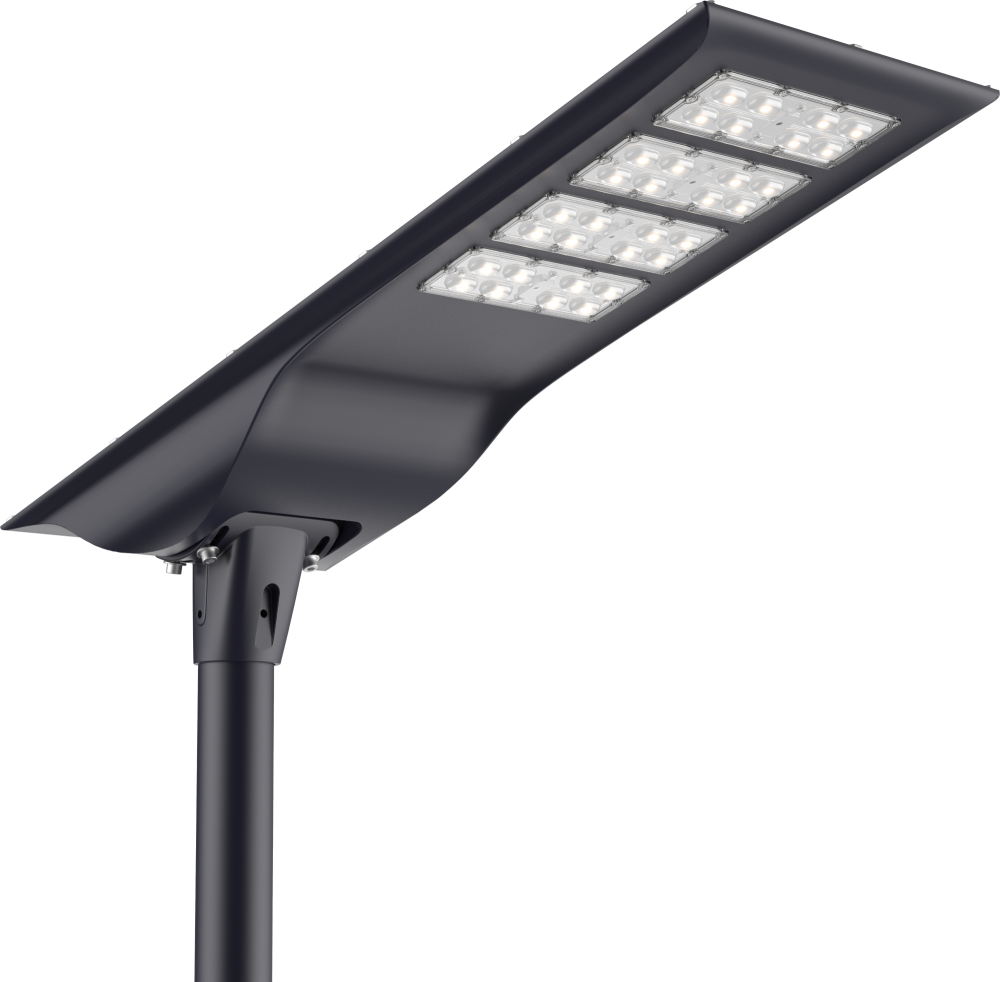
The global push for carbon neutrality has turned solar street lighting into a mainstream alternative for municipalities and developers seeking to cut grid dependency. At the forefront of this shift is the all-in-one solar street light—a compact unit that integrates solar panel, LED luminaire, lithium battery, and MPPT controller into a single housing. Unlike traditional split systems that require separate mounting and cabling, these integrated units eliminate trenching and underground wiring entirely.
The numbers tell the story. The global all-in-one solar street lights market was valued at US$167 million in 2024 and is projected to reach US$250 million by 2031. The broader solar street lighting market is expected to grow from US$3.7 billion to US$7.5 billion over the same period. Driving this growth is the technology itself: modern units with LiFePO4 batteries deliver 8–12 hours of illumination per night and can operate through 3–5 consecutive cloudy or rainy days. With MPPT controllers achieving up to 98% charging efficiency and LED efficacy surpassing 220 lumens per watt, these systems are no longer a compromise—they outperform many grid-tied alternatives.
Real-world deployments are accelerating. In October 2025, Smart Oregon Solutions installed the first double PV off-grid smart streetlight in the U.S., combining dual solar panels, intelligent lighting controls, and real-time monitoring in an all-in-one design. Meanwhile, Lagos State in Nigeria is moving to replace aging streetlights with 100,000 smart all-in-one solar units across all local government areas. Streetleaf, a U.S.-based lighting manufacturer, has already installed more than 12,000 solar-powered lights and recently signed a national vendor agreement with homebuilder Lennar Homes.
Complementing these integrated lighting systems are customized pole solutions that adapt to specific project requirements—from height and material to shape and finish. Manufacturers now offer hot-dip galvanized steel poles in round, square, tapered, and polygonal profiles, with heights ranging from 3 to 12 meters or more. This flexibility allows projects to match lighting performance with site-specific needs, whether for residential streets, highways, or industrial areas.
As energy independence moves from aspiration to reality, all-in-one solar street lights—paired with the right pole infrastructure—are proving that off-grid doesn't mean off-spec.