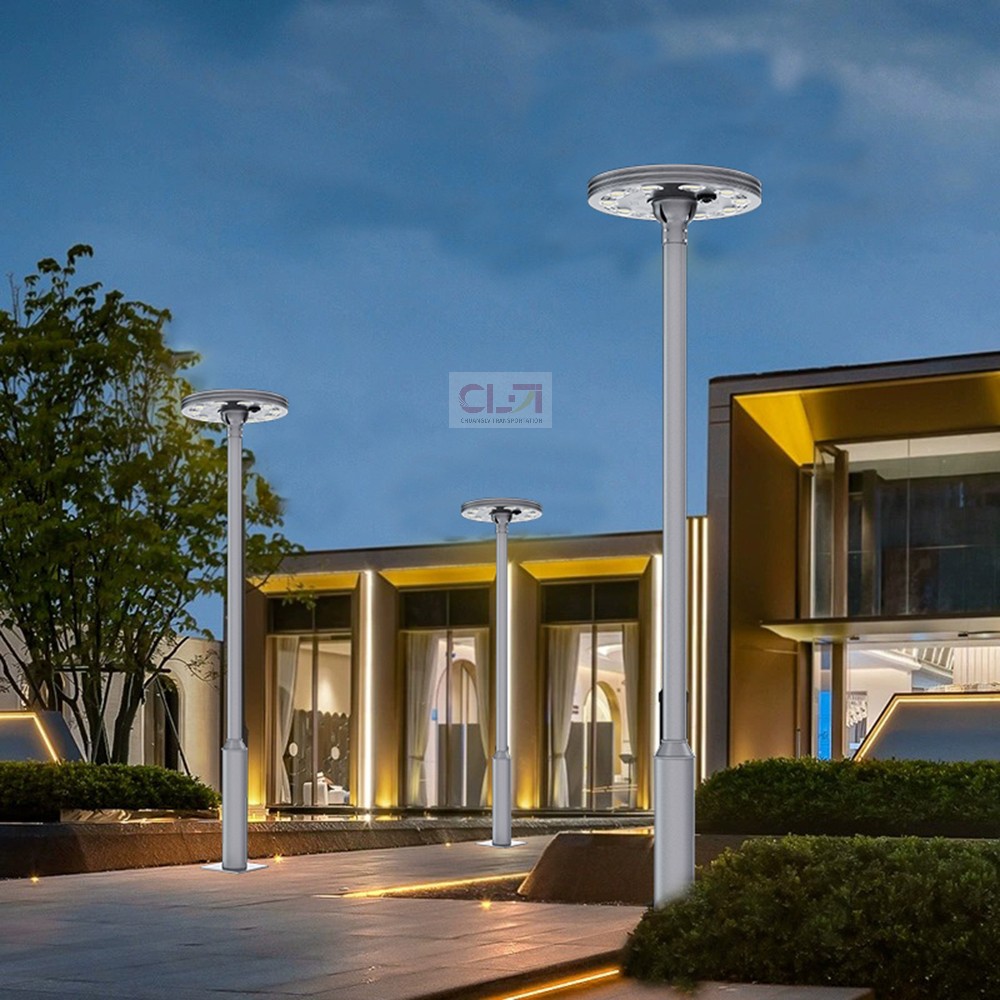
A new generation of solar powered courtyard lights is delivering all-weather automatic sensing lighting that requires zero human intervention from sunrise to sunset. The engineering breakthrough lies in advanced maximum power point tracking (MPPT) charge controllers that extract every usable watt from solar panels, even under overcast conditions. By optimizing the voltage-current curve in real time, these controllers boost charging efficiency by up to 30% compared to conventional PWM systems. The result? Reliable operation through three consecutive rainy days—a threshold that previous systems rarely achieved.
The intelligence extends to the lighting profile itself. Built-in ambient light sensors detect dusk and dawn with precision, eliminating the time-consuming seasonal adjustments that plague timer-based systems. Motion detection further refines performance: when no activity is present, output drops to a 15% standby level; the moment a pedestrian or vehicle enters the sensing zone, the fixture ramps to full brightness. This dual-mode strategy preserves battery capacity for the hours that truly matter.
For large-scale projects, Solar Street Light systems now offer centralized monitoring capabilities. Wireless mesh networks allow facility managers to view performance data across hundreds of fixtures from a single dashboard—battery levels, panel output, fault alerts. When a battery degrades or a panel becomes soiled, the system flags the unit for service before performance declines visibly. One municipal project reported reducing maintenance site visits by 70% within six months of deploying this monitoring infrastructure.
The residential and hospitality sectors are equally well served. Solar Garden Light designs now feature adjustable color temperatures—warm white for ambiance, cool white for security—expandable from a single fixture to coordinated systems covering entire property perimeters. Integrated occupancy sensors mean lights follow guests along pathways, creating both safety and ambiance.
Procurement managers are increasingly specifying the All In One Solar Street Light format for new installations. The consolidated design—solar panel, lithium battery, controller, and luminaire in a single housing—reduces component count, simplifies supplier qualification, and minimizes on-site assembly errors. Replacements are plug-and-play: a failed unit swaps out in minutes without specialized electrical knowledge.
The technology is proven. The economics are favorable. And the message for buyers is straightforward: solar lighting has matured to the point where it outperforms grid alternatives in both reliability and lifecycle cost. From sunrise to sunset, the system manages itself. Procurement just needs to sign the order.