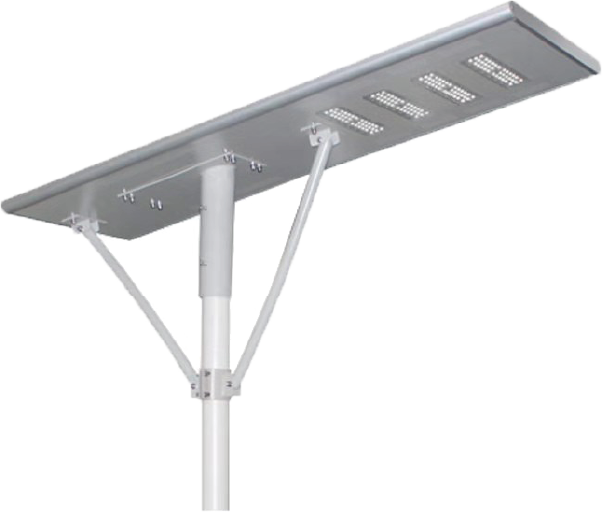
Across North America and Europe, city planners are accelerating the switch to All In One Solar Street Light systems—and the early returns are nothing short of transformative. Unlike traditional solar setups that require separate battery boxes, external controllers, and complex wiring, these integrated units pack photovoltaic panels, lithium batteries, and intelligent charge controllers into a single, sleek housing. Installation time drops from days to hours. No trenching. No grid connection fees. Just bolt, angle, and flip the switch.
The numbers are hard to ignore. Early adopters report cutting street lighting energy costs by 70% or more, with some municipalities achieving payback periods under three years. But this isn't just about dollars saved. The Solar Street Light technology now features adaptive dimming—sensors adjust brightness based on pedestrian traffic and time of night, preserving battery reserves during low-activity hours while maintaining safety standards when it matters most.
Where the real innovation shines, however, is in the Customized Pole Solution. One-size-fits-all mounting no longer applies. Manufacturers now offer variable arm lengths, integrated camera mounting brackets, and wind-resistant pole geometries tailored to specific road widths and regional weather patterns. Coastal cities get corrosion-resistant coatings. High-wind zones receive reinforced base plates. Historic districts opt for period-appropriate aesthetics that blend seamlessly with heritage architecture.
Maintenance crews appreciate the modular design—individual components can be swapped without replacing the entire unit. Remote monitoring platforms provide real-time diagnostics, alerting technicians to battery degradation or panel soiling before failures occur.
The shift is accelerating. With federal infrastructure funds increasingly favoring sustainable initiatives, the All In One Solar Street Light has moved from pilot project to procurement standard. Cities are discovering that going green isn't just environmentally responsible—it's fiscally prudent. And in today's budget-conscious climate, that's a message every council member can support.